Mold Inspection & Testing in Rolling Hills
Mold Inspection in Rolling Hills
Mold growing unseen behind your walls, in your attic, or beneath your home poses genuine health risks to everyone inside. We recognize how stressful discovering this problem can be. That’s why our mold inspection specialists deliver thorough testing and assessment to catch mold contamination early, before damage spreads. Over the years, we’ve helped countless property owners throughout the area safeguard their homes and businesses while protecting their families’ wellbeing. Here’s what sets our approach apart and why homeowners choose us.
Why Mold Testing in Rolling Hills Matters
Your home may be harboring mold long before you notice the warning signs. Many property owners don’t discover contamination until family members develop respiratory issues, allergies flare up, or visible structural damage becomes impossible to ignore. At that stage, the infestation has typically expanded well beyond its original location, making remediation more complex and costly.
Early detection changes everything. A professional mold inspection in Rolling Hills identifies active growth and moisture conditions before they compromise your health or your home’s integrity. This proactive approach catches problems when they’re still manageable, preventing the cascade of complications that follow delayed action.
Mold doesn’t always announce itself where you can spot it. It spreads silently within wall cavities, underneath your floors, and throughout your ductwork—areas a casual walk-through simply won’t reach. Standard visual checks fail to catch these concealed infestations before they cause structural damage or trigger health concerns. This is precisely why professional mold inspection and testing matter in Rolling Hills homes and properties.
Our inspectors deploy specialized equipment designed to detect mold where it actually hides. Moisture meters pinpoint elevated humidity levels that create ideal breeding conditions. Thermal imaging cameras identify temperature variations that often indicate hidden moisture problems. Air quality testing measures spore concentration inside your living spaces. We then send samples to certified laboratories for definitive identification of mold species and contamination levels. Each method targets a different aspect of the problem, working together to give you a complete picture of what’s happening throughout your property.
After inspecting thousands of homes throughout Rolling Hills, we’ve learned what the data consistently reveals: mold issues show up far more frequently than most property owners realize, yet they’re almost entirely avoidable when caught early and handled with the right approach.
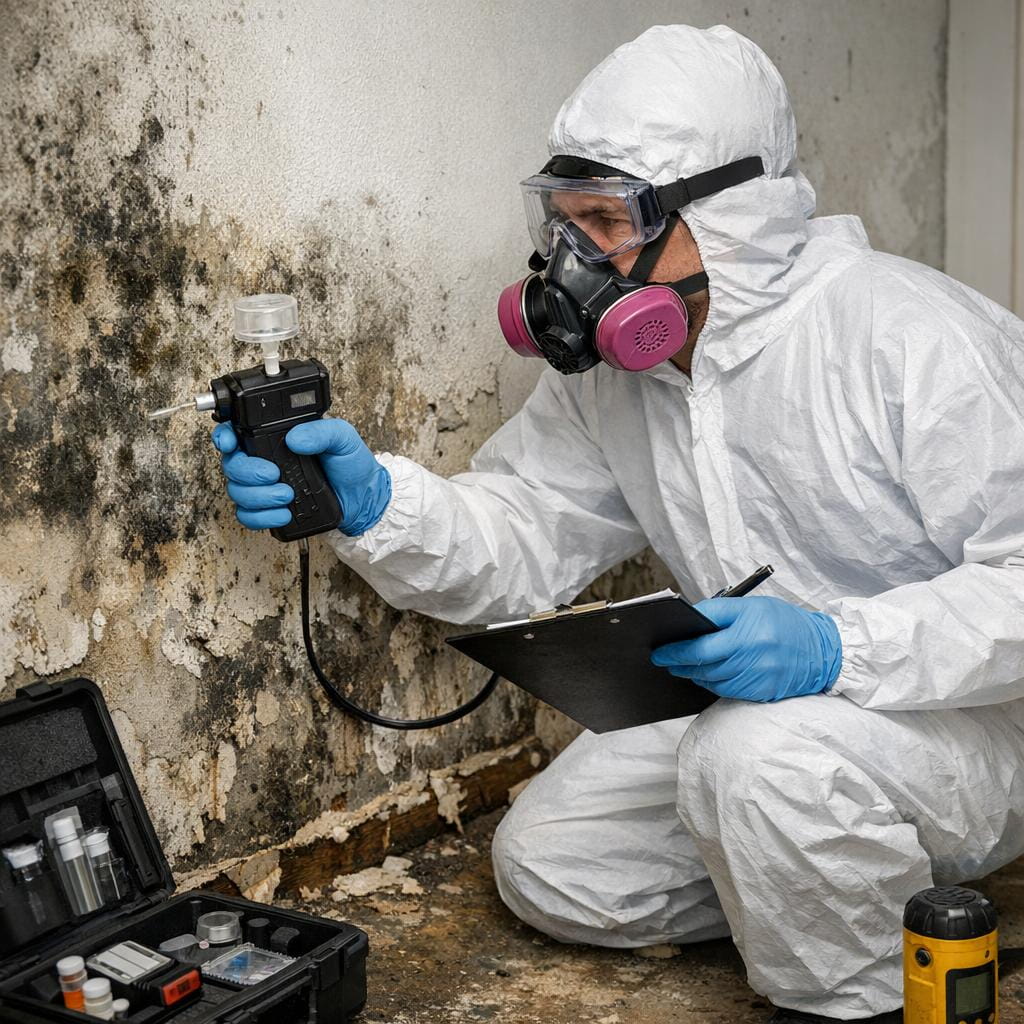
What We Inspect
When you schedule a mold inspection in Rolling Hills, our team conducts a comprehensive evaluation of your property, examining all the spaces where moisture and mold growth typically take hold—from crawl spaces and attics to bathrooms, basements, and around windows and doors.
Your attic can become a moisture trap when ventilation falls short or roof leaks go undetected. During inspection, we evaluate the structural framing, insulation condition, and whether your ventilation system is actually moving air effectively. Crawl spaces present their own set of problems since ground moisture naturally rises and air stagnates in these confined areas. We check your foundation’s integrity, assess vapor barrier effectiveness, and trace how water moves through your drainage system. Basements face compounding moisture issues from multiple sources. Seepage through foundation walls, malfunctioning sump pumps, and surface condensation all work together to create ideal conditions for mold growth. Our inspection covers your basement walls, concrete floors, and the mechanical systems that should be managing humidity but often aren’t.
Your bathrooms and kitchens face constant exposure to moisture, which makes them prime environments for mold growth. During an inspection, we pay close attention to areas around plumbing fixtures, underneath sinks, and inside wall cavities where condensation collects and spreads unseen. Your HVAC system can inadvertently become a mold distribution network, pushing contaminated spores into every room of your home. We examine ductwork, evaporator coils, and air filters as part of our thorough evaluation. Garages and storage spaces frequently escape homeowner attention, yet they harbor moisture problems just as easily. We include these often-forgotten zones in our comprehensive rolling hills mold inspection to ensure nothing gets missed.
The Inspection Report You’ll Actually Understand
Many homeowners in Rolling Hills receive mold inspection reports filled with technical jargon and unclear conclusions that don’t actually answer their most pressing questions. Our approach is different. We focus on delivering straightforward, actionable findings that you can understand and act on immediately, without needing a dictionary or a degree in mycology.
When you receive your mold inspection report from us, you’ll find it written in plain language rather than industry jargon. We walk you through our findings step by step, identifying exactly where mold growth or moisture issues are present in your Rolling Hills home or commercial property. Each report includes detailed photographs showing problem areas, quantified moisture measurements from affected spaces, and laboratory analysis of any samples we’ve collected. Beyond the raw data, we interpret those results for you in practical terms so you understand the actual implications for your property’s structural integrity and your family’s health.
When you receive your mold inspection results, you’ll get clear direction on what comes next. Rather than leaving you with ambiguous findings, we outline the exact steps your home requires. Whether you need to engage a remediation specialist right away, enhance airflow and moisture control in specific areas, or simply establish a monitoring schedule depends entirely on what we discover during the inspection. Our recommendations factor in the species of mold present, the extent of the contamination, and precisely where it’s growing in your Rolling Hills property. This specificity means you can move forward with confidence, knowing exactly what action—if any—your situation demands.
When we complete your inspection, you’ll receive more than just a report. We provide actionable recommendations tailored to your specific property, because every home and building has its own set of risk factors. By identifying the vulnerabilities unique to your Rolling Hills property—whether that’s moisture entry points, ventilation issues, or construction materials prone to mold growth—we help you take preventive steps before problems develop. This proactive approach typically costs far less than addressing advanced mold damage later. Many property owners find that implementing our guidance protects their investment and avoids the substantial expense of full remediation down the road.
Why Rolling Hills Properties Need Regular Inspection
Rolling Hills presents distinct conditions that make mold assessment more complex than in other Los Angeles neighborhoods. The area experiences significant seasonal shifts in moisture levels, with summer heat creating condensation problems as temperatures drop at night. Winter rainfall puts your home’s roofing and drainage systems under considerable stress, potentially allowing water infiltration that supports mold growth. Properties throughout the community face different risk profiles depending on their age. Older homes frequently struggle with foundation cracks and deteriorating plumbing systems that can leak silently for months. Newer construction, meanwhile, sometimes suffers from insufficient ventilation design, which traps humidity indoors and creates ideal conditions for mold to develop in walls, attics, and crawl spaces. Understanding these local patterns helps you know where problems are most likely to occur and why professional inspection becomes essential for your specific property.
Your property’s vulnerability to mold depends heavily on where it’s located. In Rolling Hills, the coastal climate creates persistent humidity and salt air exposure that accelerates mold growth on building materials. Inland elevations experience dramatic temperature swings that can promote condensation and moisture accumulation in wall cavities and attics. Urban properties throughout the area often contend with aging plumbing and ventilation systems that weren’t designed for modern moisture management standards. Understanding these location-specific risk factors is essential before selecting the right inspection approach for your home or commercial space.
When you’re dealing with mold in Rolling Hills, you need an inspection team that understands your specific environment. We’ve worked throughout the area long enough to recognize the particular moisture challenges, building styles, and climate conditions that characterize your community. Rather than applying a one-size-fits-all approach, we bring hands-on regional experience directly to your property.
When You Should Call Us
Your home or property may benefit from professional mold inspection in several common scenarios. If you notice visible mold patches on walls, ceilings, or other surfaces, professional assessment becomes important. A persistent musty smell throughout your property often signals hidden mold growth that visual inspection alone won’t catch. When household members develop unexplained respiratory issues, persistent allergies, or asthma flare-ups without an obvious cause, mold contamination warrants investigation. Properties that have experienced water damage, flooding, or significant moisture events need testing even if surfaces appear dry, since mold can develop within walls and beneath flooring over time. If you’re purchasing a home in the Rolling Hills area, baseline mold testing provides peace of mind and protects your investment before closing. Sellers benefit from obtaining mold-free certification to strengthen buyer confidence and streamline the transaction. Property managers overseeing rental units rely on regular inspections to maintain tenant health, reduce liability, and protect asset value. Finally, if you suspect your HVAC system has become contaminated or serves as a mold vector throughout your building, professional evaluation can identify whether your ductwork and mechanical systems need specialized remediation.
Your property may appear perfectly fine on the surface, yet hidden moisture and developing mold problems could already be underway. A professional mold inspection in Rolling Hills catches these threats during their earliest stages, often years before visible growth becomes apparent to the naked eye. This proactive approach protects both your investment and your family’s respiratory health while avoiding the exponentially higher costs associated with advanced mold remediation. What seems like a routine inspection today can prevent serious structural damage and costly treatment bills tomorrow.
Credentials and Certifications Matter
Your mold inspection team in Rolling Hills brings certified expertise backed by rigorous professional training. Our inspectors have completed comprehensive coursework in mold identification, laboratory testing protocols, and the health impacts of different mold species. The testing laboratories we partner with maintain active accreditation and adhere to standardized procedures established by industry bodies. We keep our knowledge current as mold science and detection technology evolve, ensuring you receive assessments based on the latest methods and findings rather than outdated practices.
Your confidence in our work rests on a foundation we take seriously. We carry full insurance coverage to protect your interests throughout every inspection. Our team participates in recognized industry organizations and pursues ongoing education to stay current with evolving mold science, detection methods, and remediation standards. This isn’t window dressing—these practices ensure that when you hire us, you’re working with trained professionals who base their findings on established protocols and real expertise, not assumptions or shortcuts.
Schedule Your Appointment Today
Mold doesn’t disappear on its own. What starts as a small patch of growth typically expands over time, especially in Rolling Hills’ humid climate. By the moment visible mold becomes apparent to you, the underlying contamination has often extended far beyond what you can see—potentially throughout your walls, insulation, and structural materials. This is precisely why professional mold inspection and testing matters. A qualified assessment identifies both active growth and hidden moisture problems before they compromise your home’s integrity or your family’s health.
Getting a clear picture of your property’s condition starts with reaching out to us for a comprehensive mold inspection. We’ll conduct a detailed assessment of your Rolling Hills home or business, examining the areas most vulnerable to moisture problems and fungal growth. Once we’ve completed our evaluation, you’ll receive straightforward findings without exaggeration or sales pressure. We take time to explain what we’ve discovered, walk you through your available options, and address any concerns that come up. Our goal isn’t to alarm you or recommend treatments you don’t need—it’s to equip you with accurate, actionable information so you can protect your property and the people living in it.
Rolling Hills residents deserve peace of mind about their homes and businesses. That’s exactly what we provide.
Professional Mold Testing & Inspection Services in Rolling Hills
Air Testing in Rolling Hills
Our air testing methodology captures microscopic particles floating through your indoor environment, revealing hidden threats that visual inspection alone cannot detect. We collect samples using specialized equipment that draws air through collection media, then analyze the results in our certified laboratory. This approach is particularly valuable for properties with occupants experiencing respiratory issues, allergies, or compromised immune systems. We measure spore concentration levels, identify specific mold species present, and compare indoor readings to outdoor baselines—data that tells us whether your property has an active mold problem requiring intervention.
Thermal Imaging in Rolling Hills
Swab Testing in Rolling Hills
Moisture Detection in Rolling Hills
What Sets Our Mold Testing Company Apart
We use advanced technology and proven inspection methods to accurately detect and identify mold in your property. Our thorough mold inspections and professional testing help uncover hidden mold issues and determine the extent of contamination, giving you clear answers about the air quality and overall condition of your home or business.
We combine cutting-edge equipment with experienced human judgment. Technology alone can’t interpret what matters for your specific situation. Our inspectors have logged thousands of hours analyzing mold patterns across different property types.
We provide written reports within 48 hours. These documents detail findings, affected areas, and severity levels. You’ll understand exactly what you’re dealing with before making any decisions.
Our team holds industry certifications. These credentials mean we follow standardized protocols and stay current with the latest testing methodologies.
Most people can’t tell the difference between a mold problem and regular moisture buildup. We use advanced testing methods that go way beyond what your eyes can see.
Our process starts with a thorough visual inspection. We look at your walls, ceilings, bathrooms, basements, and HVAC systems. Then comes the science part. We collect air samples using specialized equipment. These samples get tested in our certified laboratory. We measure spore counts and identify specific mold species present in your home.
The real value? We provide you with data. Hard evidence. Not guesses. Our moisture meters detect hidden moisture behind walls where mold thrives before you even know it’s there. We check crawl spaces, attics, and areas prone to condensation. Some clients don’t realize they have toxic mold species like Stachybotrys or Aspergillus until we test. That knowledge changes everything about your remediation plan.
We’ve been testing mold in Rolling Hills for years. Our team understands the unique climate challenges here. The coastal moisture, seasonal temperature shifts, and aging infrastructure create perfect conditions for mold growth that other regions don’t experience as severely.
Our inspectors hold industry certifications. We use EPA-approved testing protocols. Our laboratory partners are accredited and maintain strict quality standards. But here’s what really sets us apart. We don’t just identify the problem. We explain what caused it.
You’ll get a detailed report showing exactly where mold was found, what species it is, and moisture levels throughout your property. We discuss ventilation issues, drainage problems, and roof leaks that allowed growth. Our clients appreciate this educational approach. You understand your home’s vulnerabilities. You know what to fix first.
A standard residential inspection usually runs between two to four hours. The exact timeline depends on your home’s size and complexity. A small apartment takes less time than a three-story house with multiple basements.
Our process is thorough but efficient. We don’t rush through this. We map out problem areas systematically. We take photographs and document findings as we go. We collect air samples from multiple locations inside your home and outdoors for comparison. We check your HVAC system closely because mold spreads through ducts rapidly.
For commercial properties, testing takes longer. We might spend an entire day inspecting. Larger square footage requires more sampling points. We check storage areas, crawl spaces, mechanical rooms, and common areas.
You’ll receive preliminary findings during our visit. The detailed laboratory results arrive within five to seven business days. We schedule a follow-up consultation to review everything. This gives you time to ask questions and plan next steps.
Absolutely. This is one of the most important reasons to test. Many people experience mold exposure symptoms without realizing the source. Some develop allergies and respiratory issues gradually. Others have sensitivities they’ve never attributed to mold.
Our testing identifies what’s actually in your air. Certain mold species trigger more severe health reactions than others. Aspergillus fumigatus causes serious lung infections in vulnerable populations. Penicillium species trigger allergic responses. Fusarium varieties produce toxins. Knowing which species live in your home matters for health decisions.
We recommend testing if anyone in your family has asthma, allergies, weakened immunity, or unexplained respiratory symptoms. Young children and elderly relatives face higher risks. People with chronic lung disease need this information. Your doctor can help you connect health symptoms to specific mold exposure once we provide the identification.
Prevention beats treatment every time. Early detection saves money on remediation. It protects your family’s long-term health. We’ve had clients discover serious mold problems before anyone got sick. That’s our goal. Catch it early.
You receive a comprehensive written report. It includes photographs, moisture readings, air quality data, and laboratory results. The report identifies all mold species found. It shows concentration levels. It highlights high-risk areas requiring immediate attention.
But we don’t leave you hanging. We explain what everything means in plain language. We discuss whether remediation is necessary or if preventative measures work. We suggest specific solutions. We connect you with qualified remediation specialists if needed. We don’t do remediation ourselves, which means our recommendations stay objective and unbiased.
You can take our report to contractors for repair estimates. Insurance companies use it for claims. Real estate agents reference it during transactions. Future buyers appreciate documentation showing you took the problem seriously.
Some clients discover they don’t need extensive remediation, just improved ventilation or moisture control. Others find major issues requiring professional cleanup. Either way, you have clarity. You have proof. You have direction. That empowerment is what we’re really selling. Knowledge transforms uncertainty into confidence.