Mold Inspection & Testing in Woodland Hills
Mold Inspection in Woodland Hills
Mold growth behind walls, in attics, and under crawl spaces poses genuine health risks to you and your family. We recognize how stressful discovering mold can be, and we’re here to help you take action before the problem escalates. Our mold inspection team conducts thorough testing and detailed assessments to catch mold contamination early, when it’s easier and less costly to address. For years, we’ve worked with homeowners and business operators throughout the area to safeguard their properties and the people who live and work in them. Here’s what sets our approach apart and why property owners choose us for their mold concerns.
Why Mold Testing in Woodland Hills Matters
You might not notice a mold problem until your health or home starts showing signs of trouble. Respiratory symptoms, allergic reactions, and structural deterioration often appear only after mold has already established itself and spread throughout your property. Early detection makes a real difference in controlling the scope of remediation and protecting your investment. Our mold inspection and testing services in Woodland Hills are designed to identify growth before it becomes a costly problem, catching issues at stages when they’re far easier and less expensive to address.
Mold grows where you cannot reach it. Behind your walls, beneath your floors, deep within your HVAC ducts—these are where colonies establish and spread undetected. A walk-through of your home or business catches only what sits on the surface. The real problem hides in the spaces between.
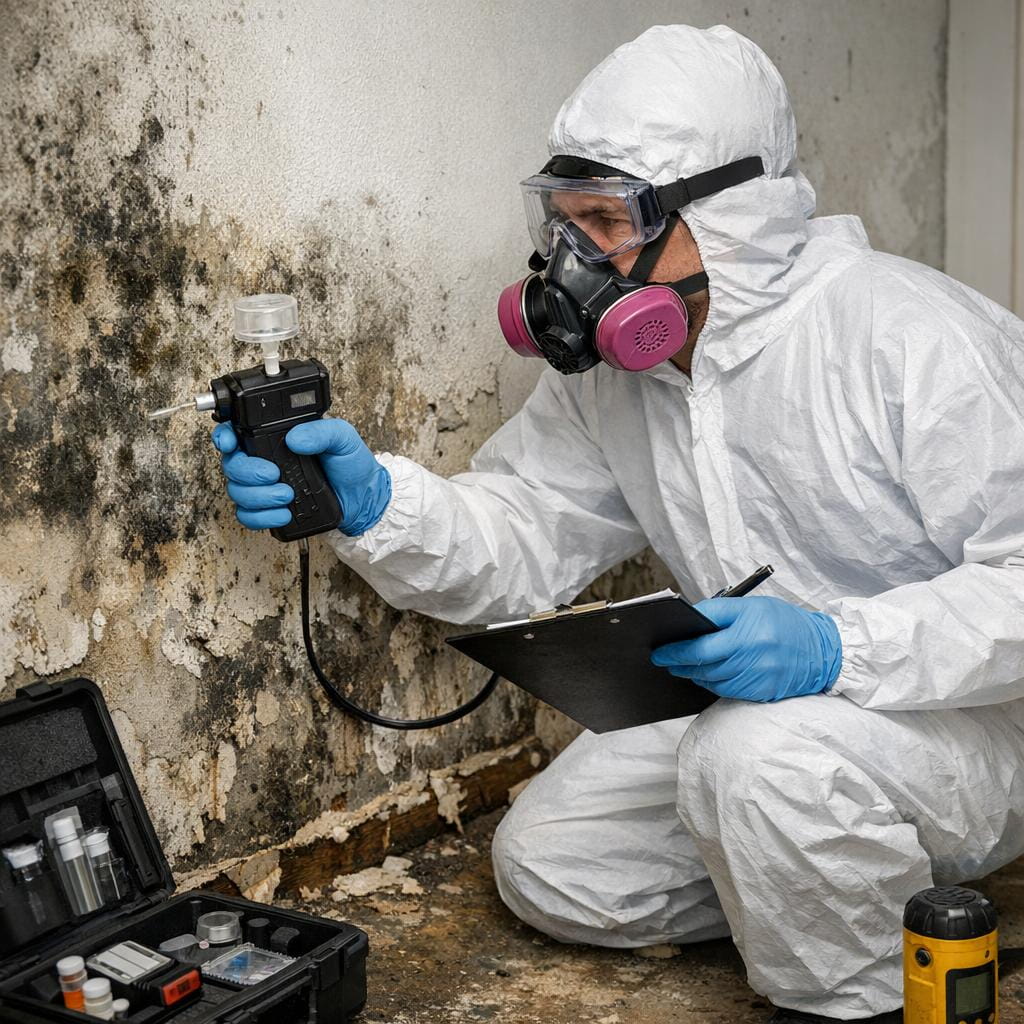
This is why professional mold inspection and testing matter. We deploy specialized equipment designed to find what visual surveys miss. Moisture meters pinpoint areas where water has accumulated or lingered. Thermal imaging reveals temperature variations that indicate moisture buildup and potential mold growth. Air quality testing measures spore concentration throughout your indoor environment. Laboratory analysis of collected samples confirms the exact species present and the extent of contamination.
Each method targets a different layer of the investigation. Together, they build a complete picture of what’s actually happening inside your Woodland Hills property—not just what appears obvious, but what requires intervention before it becomes a structural or health concern.
Our experience inspecting thousands of Woodland Hills properties has revealed a consistent truth: mold contamination affects far more homes than residents realize, but it remains largely preventable when caught early and addressed promptly.
What We Inspect
When you choose professional mold inspection in Woodland Hills, you’re getting a systematic evaluation designed to uncover hidden moisture and fungal growth before they become costly problems. Our team examines all the spaces where mold thrives—from attics and crawl spaces to bathrooms, basements, and around windows and doors where condensation often accumulates.
Your attic is especially vulnerable to moisture problems. Without proper ventilation, humidity builds up naturally, and even minor roof leaks can go undetected until mold takes hold. During our inspection, we examine the framing, insulation condition, and ventilation setup to identify where moisture is entering and accumulating.
Crawl spaces present their own set of challenges. Ground moisture wicks up constantly, and stagnant air prevents it from drying out. We evaluate your foundation’s condition, check whether vapor barriers are installed and functioning properly, and assess your drainage system to see if water is being directed away from the structure or pooling underneath.
Basements face similar pressures. Water seepage through foundation cracks, failed or overwhelmed sump pumps, and seasonal condensation all create the exact conditions mold needs to thrive. We inspect foundation walls, floor areas, and the mechanical systems in place to understand how moisture is moving through the space and where it’s settling.
Moisture in your Woodland Hills home tends to accumulate where you least expect it. Bathrooms and kitchens are constant sources, especially around fixtures and beneath sink cabinets where slow leaks can persist unnoticed. Water damage often hides behind walls too, creating ideal conditions for mold growth before you see any visible signs.
Your HVAC system deserves special attention during inspection. Once mold takes hold in ductwork or on cooling coils, it can spread spores throughout every room in your home. A thorough assessment includes checking filters, vents, and accessible sections of your air distribution system.
Many property owners overlook garages and storage spaces, but these areas frequently harbor moisture problems. Concrete floors, poor ventilation, and seasonal temperature swings make them vulnerable to mold development. Our comprehensive inspection covers these often-neglected zones alongside the main living areas of your home, ensuring you get a complete picture of any potential mold concerns.
The Inspection Report You’ll Actually Understand
You deserve a mold inspection report that actually makes sense. We’ve reviewed countless confusing assessments in the Woodland Hills area that leave homeowners uncertain about what they’re reading and what happens next. Our approach is different. We prioritize clarity at every step, from sampling methods through final recommendations, so you understand exactly what we found and why it matters for your home.
When you receive your mold inspection report, you’ll find it written in clear, accessible language rather than technical jargon. We walk you through our findings step by step, pinpointing exactly where mold growth or moisture concerns have been detected throughout your Woodland Hills property. Every report includes detailed photographs that document the affected areas, along with moisture meter readings taken on-site. We also incorporate lab analysis results when samples have been collected and tested. Beyond the data itself, we interpret what these findings mean for your home’s structural integrity and your family’s health, giving you the context you need to make informed decisions about remediation and next steps.
When you receive your mold inspection report, you’ll get clear direction on what comes next—not generic warnings or unclear recommendations. We assess the specific type of mold present, measure the extent of contamination, and consider where it’s located in your home. From there, we advise whether you need immediate remediation services, whether ventilation improvements will resolve the issue, or whether monitoring over time is the appropriate course. Your situation gets a tailored response, not a one-size-fits-all conclusion.
Your property has its own set of vulnerabilities when it comes to moisture and mold risk. Rather than offering one-size-fits-all recommendations, we identify the specific conditions that make your Woodland Hills home or building susceptible to growth, then walk you through practical steps to prevent problems before they start. This personalized approach to prevention typically stops costly remediation work before it becomes necessary, protecting both your property and your budget.
Why Woodland Hills Properties Need Regular Inspection
Mold growth in Woodland Hills stems from distinct environmental and structural factors that require professional attention. The region’s climate creates natural moisture patterns throughout the year, with summer heat producing condensation as temperatures drop at night, while winter rainfall puts pressure on aging roofing and drainage infrastructure. Properties built decades ago frequently struggle with foundation vulnerabilities and deteriorating plumbing systems that allow water intrusion. Even recently constructed homes can develop problems when builders cut corners on ventilation design, leaving trapped moisture that feeds mold development behind walls and in crawl spaces. Understanding these specific risk factors helps explain why mold inspection and testing is essential for both older and newer Woodland Hills homes.
Woodland Hills properties present unique environmental challenges that vary significantly by location and building characteristics. Properties closer to coastal influences contend with salt-laden air and persistent moisture that accelerates mold colonization in wall cavities and HVAC systems. Inland Woodland Hills homes experience temperature swings that create condensation cycles, particularly in attics and crawl spaces where temperature differentials are most pronounced. Older structures throughout the community often feature outdated ventilation systems and moisture barriers that weren’t designed for contemporary humidity levels, making them especially vulnerable to hidden mold growth behind walls and under flooring.
Understanding these location-specific conditions is essential when evaluating your home’s mold risk. A comprehensive mold inspection tailored to Woodland Hills’ particular climate patterns and your property’s age and construction type will reveal vulnerabilities that generic inspections typically miss. This targeted approach helps you address moisture sources before they develop into serious structural or health concerns specific to your neighborhood’s environmental conditions.
When you’re dealing with mold in Woodland Hills, you need someone who understands the specific conditions that create moisture problems in this area. We’re not applying a one-size-fits-all approach from some national playbook. Our inspectors know the local climate patterns, building styles, and environmental factors that contribute to mold growth in your neighborhood. That localized expertise makes a real difference in identifying problems that generic protocols might miss.
When You Should Call Us
Professional mold inspection becomes essential when several red flags appear in your home or building. Visible mold patches—whether on walls, ceilings, or hidden surfaces—demand immediate attention from a qualified inspector. A persistent musty smell often signals mold activity even when growth isn’t visible to the eye. If you or your family members notice new respiratory issues, persistent coughing, or worsening allergies without an obvious cause, mold contamination may be the culprit worth investigating.
Past water damage, recent flooding, or ongoing moisture problems create ideal breeding grounds for mold and warrant professional assessment to catch problems before they spread. When you’re in escrow or preparing to purchase a property, baseline mold testing protects your investment and reveals any existing issues before closing. Similarly, sellers benefit from proactive inspection and clearance documentation to demonstrate the property’s condition to buyers and avoid complications during negotiations.
Property managers and landlords should consider regular mold inspections as part of responsible asset management. Your HVAC system can become a vector for mold spores throughout your building if contamination takes hold, making inspection of ductwork and air handling components particularly important for indoor air quality.
Your property may look fine on the surface, yet hidden moisture problems could already be developing behind walls and under floors. That’s where preventative mold inspection becomes your best investment. By testing before visible growth appears, you can catch moisture intrusion years before it becomes a costly remediation project or health concern. Many homeowners in Woodland Hills discover through inspection that conditions favorable to mold development are already present, allowing them to address the underlying moisture source before spores take hold. This approach costs far less than waiting for damage to become visible and substantially protects your family’s health and your home’s structural integrity.
Credentials and Certifications Matter
Your mold inspection team brings certified expertise grounded in rigorous professional training. Each inspector has mastered mold identification, proper sampling techniques, and the health implications that matter most to you and your family. We partner with accredited laboratories that adhere to strict testing standards, ensuring your results are accurate and reliable. As mold science and detection methods evolve, we continuously update our knowledge and practices to reflect current industry best practices.
Your mold inspection in Woodland Hills deserves more than guesswork. We maintain active insurance coverage, stay current with advancing inspection techniques through ongoing education, and participate in recognized industry organizations. This foundation of professionalism means you’re working with inspectors who bring real expertise to your property, not just confidence.
Schedule Your Appointment Today
Mold doesn’t disappear on its own, and waiting makes the problem worse. Once you spot visible mold growth in your Woodland Hills home, the contamination has typically already spread into areas you can’t see—behind walls, under flooring, and throughout your HVAC system. What begins as a small patch becomes a serious structural and health concern when left unaddressed.
When you reach out to us for a mold inspection in Woodland Hills, you’re getting more than just a surface-level assessment. Our team conducts a detailed evaluation of your property, identifying moisture sources, vulnerable areas, and any active mold growth. We’ll walk you through exactly what we found, discuss what it means for your home, and lay out your actual options without pressuring you toward services you don’t need. Your peace of mind matters, and that starts with straight answers about your property’s condition and what steps make sense for protecting your family.
Woodland Hills residents deserve peace of mind about their homes and businesses. That’s exactly what we provide.
Professional Mold Testing & Inspection Services in Woodland Hills
Air Testing in Woodland Hills
Our air testing methodology captures microscopic particles floating through your indoor environment, revealing hidden threats that visual inspection alone cannot detect. We collect samples using specialized equipment that draws air through collection media, then analyze the results in our certified laboratory. This approach is particularly valuable for properties with occupants experiencing respiratory issues, allergies, or compromised immune systems. We measure spore concentration levels, identify specific mold species present, and compare indoor readings to outdoor baselines—data that tells us whether your property has an active mold problem requiring intervention.
Thermal Imaging in Woodland Hills
Swab Testing in Woodland Hills
Moisture Detection in Woodland Hills
What Sets Our Mold Testing Company Apart
We use advanced technology and proven inspection methods to accurately detect and identify mold in your property. Our thorough mold inspections and professional testing help uncover hidden mold issues and determine the extent of contamination, giving you clear answers about the air quality and overall condition of your home or business.
We combine cutting-edge equipment with experienced human judgment. Technology alone can’t interpret what matters for your specific situation. Our inspectors have logged thousands of hours analyzing mold patterns across different property types.
We provide written reports within 48 hours. These documents detail findings, affected areas, and severity levels. You’ll understand exactly what you’re dealing with before making any decisions.
Our team holds industry certifications. These credentials mean we follow standardized protocols and stay current with the latest testing methodologies.
Most people can’t tell the difference between a mold problem and regular moisture buildup. We use advanced testing methods that go way beyond what your eyes can see.
Our process starts with a thorough visual inspection. We look at your walls, ceilings, bathrooms, basements, and HVAC systems. Then comes the science part. We collect air samples using specialized equipment. These samples get tested in our certified laboratory. We measure spore counts and identify specific mold species present in your home.
The real value? We provide you with data. Hard evidence. Not guesses. Our moisture meters detect hidden moisture behind walls where mold thrives before you even know it’s there. We check crawl spaces, attics, and areas prone to condensation. Some clients don’t realize they have toxic mold species like Stachybotrys or Aspergillus until we test. That knowledge changes everything about your remediation plan.
We’ve been testing mold in Woodland Hills for years. Our team understands the unique climate challenges here. The coastal moisture, seasonal temperature shifts, and aging infrastructure create perfect conditions for mold growth that other regions don’t experience as severely.
Our inspectors hold industry certifications. We use EPA-approved testing protocols. Our laboratory partners are accredited and maintain strict quality standards. But here’s what really sets us apart. We don’t just identify the problem. We explain what caused it.
You’ll get a detailed report showing exactly where mold was found, what species it is, and moisture levels throughout your property. We discuss ventilation issues, drainage problems, and roof leaks that allowed growth. Our clients appreciate this educational approach. You understand your home’s vulnerabilities. You know what to fix first.
A standard residential inspection usually runs between two to four hours. The exact timeline depends on your home’s size and complexity. A small apartment takes less time than a three-story house with multiple basements.
Our process is thorough but efficient. We don’t rush through this. We map out problem areas systematically. We take photographs and document findings as we go. We collect air samples from multiple locations inside your home and outdoors for comparison. We check your HVAC system closely because mold spreads through ducts rapidly.
For commercial properties, testing takes longer. We might spend an entire day inspecting. Larger square footage requires more sampling points. We check storage areas, crawl spaces, mechanical rooms, and common areas.
You’ll receive preliminary findings during our visit. The detailed laboratory results arrive within five to seven business days. We schedule a follow-up consultation to review everything. This gives you time to ask questions and plan next steps.
Absolutely. This is one of the most important reasons to test. Many people experience mold exposure symptoms without realizing the source. Some develop allergies and respiratory issues gradually. Others have sensitivities they’ve never attributed to mold.
Our testing identifies what’s actually in your air. Certain mold species trigger more severe health reactions than others. Aspergillus fumigatus causes serious lung infections in vulnerable populations. Penicillium species trigger allergic responses. Fusarium varieties produce toxins. Knowing which species live in your home matters for health decisions.
We recommend testing if anyone in your family has asthma, allergies, weakened immunity, or unexplained respiratory symptoms. Young children and elderly relatives face higher risks. People with chronic lung disease need this information. Your doctor can help you connect health symptoms to specific mold exposure once we provide the identification.
Prevention beats treatment every time. Early detection saves money on remediation. It protects your family’s long-term health. We’ve had clients discover serious mold problems before anyone got sick. That’s our goal. Catch it early.
You receive a comprehensive written report. It includes photographs, moisture readings, air quality data, and laboratory results. The report identifies all mold species found. It shows concentration levels. It highlights high-risk areas requiring immediate attention.
But we don’t leave you hanging. We explain what everything means in plain language. We discuss whether remediation is necessary or if preventative measures work. We suggest specific solutions. We connect you with qualified remediation specialists if needed. We don’t do remediation ourselves, which means our recommendations stay objective and unbiased.
You can take our report to contractors for repair estimates. Insurance companies use it for claims. Real estate agents reference it during transactions. Future buyers appreciate documentation showing you took the problem seriously.
Some clients discover they don’t need extensive remediation, just improved ventilation or moisture control. Others find major issues requiring professional cleanup. Either way, you have clarity. You have proof. You have direction. That empowerment is what we’re really selling. Knowledge transforms uncertainty into confidence.